
National Day of Action to Close the Loopholes
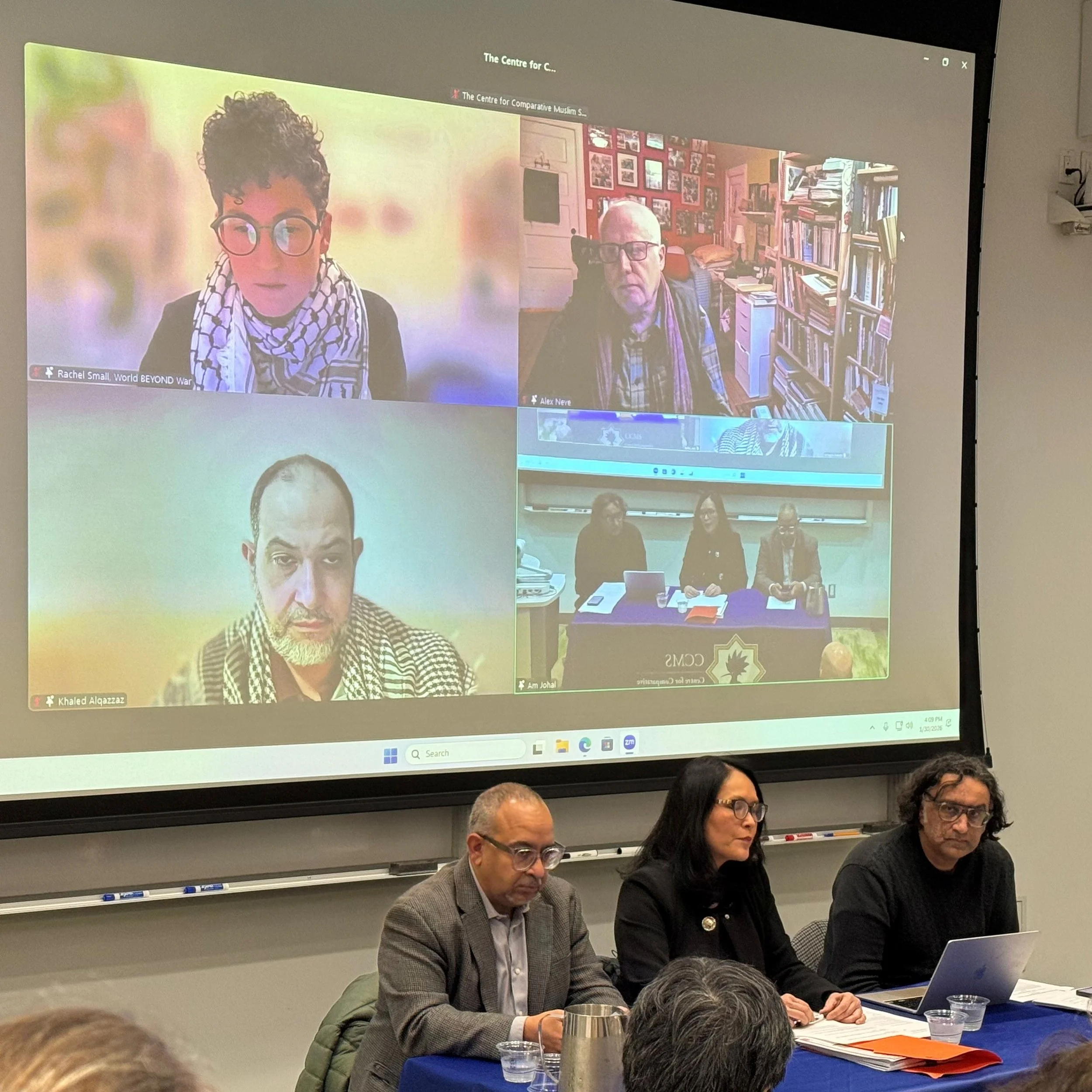
No More Loopholes panel discussion at SFU Harbour Centre on January 30, 2026.
CoDevelopment Canada calls on all members of parliament to vote to pass Bill C-233, the No More Loopholes Act. This Act will end the flow of Canadian arms and military components through the United States to locations where they are used to commit human rights atrocities including genocide. Bill C-233 will be up for a vote in the House of Commons sometime before the end of February. In order to draw public attention to the importance of Bill C-233, February 17 has been declared a National Day of Action to Close the Loopholes.
During a panel discussion hosted at SFU Harbour Centre on January 30, MP Jenny Kwan explained why passing her private member’s bill is so important:
“Despite acceding to the United Nations Arms Trade Treaty in 2019, Canada is failing to meet its most basic responsibilities under international law. And most of the glaring failure is the blanket exemption of arms exports to the United States… Canadian-made parts are folded into US weapons systems and re-exported to war zones where war crimes are being committed. Canada benefits economically while pretending it bears no responsibility.”
According to Kwan, the Act would amend the permit process so that arms exported to the United States are treated like any other arms export. This would include risk assessments that provide transparency and accountability. The Act will also bring Canada into compliance the Arms Trade Treaty (ATT) and international best practices.
One of the other panelists was Alex Neve, Massey lecturer and former Secretary-General of Amnesty International Canada. He described retrieving “twisted fragments of weapons” used in committing atrocities in Sudan some years ago. Amnesty researchers determined that the fragments were from cluster bombs, artillery rockets, barrel bombs, and high caliber bullets. They also determined the fragments originated in eight countries, including Canada.
Canadian companies selling weapons to the U.S. currently do not have to apply for a permit which means the sales are not scrutinized for compliance with the ATT. Furthermore, as Neve notes:
“We have no eyeballs on what comes of these weapons. How are they used in the United States? By whom? Or to whom are they further sold or transferred? Perhaps after being incorporated into a missile or fighter jet or a weapon system? None of this is theoretical: U.S. military strikes in Venezuela, the shocking violence committed by ICE, and Israel’s bombardment and genocide in Gaza.”
Neve added that “the illegal U.S. attack on Venezuela” relied on F-35 fighter jets, each containing millions of dollars worth of Canadian-made components from landing gear to engine parts. The unlawful bombing of so-called terrorist fishing boats in the Caribbean and Pacific on at least one occasion involved the use of advanced sensors manufactured in Hamilton. Brampton-manufactured armoured vehicles are being used by ICE in Minneapolis.
“This is clearly a betrayal of the promise and frankly a clear violation of our obligations. How can our government credibly say to Canadians they are comfortable with an arms control process that refuses to sell weapons directly to a human rights violator, but we are okay with making the sale to someone else who then closes the deal. Direct or indirect, no Canadian-made arms should make it through… that is why Bill C-233, the No More Loopholes Act, matters so much. It is what international legal obligations require of us and it is simply what humanity requires of us.”
Bill C-233 is also supported by Oxfam Canada, Kairos Canada, Canadian Friends of Sabeel, Canadians for a Just Peace in the Middle East, Independent Jewish Voices, National Council of Canadian Muslims, Canadian Muslim Public Affairs Council, World Without War, and Greenpeace Canada.