
The Risk of Defending the Land: Indigenous Leadership Under Attack in Colombia
Nearly a decade after Colombia’s 2016 Peace Accord, armed conflict continues to shape daily life across large parts of the country. Violence has evolved through the territorial control by illegal armed groups, resulting in threats, targeted attacks, and forced displacement. Indigenous, Afro-descendant, and rural communities are disproportionately affected.
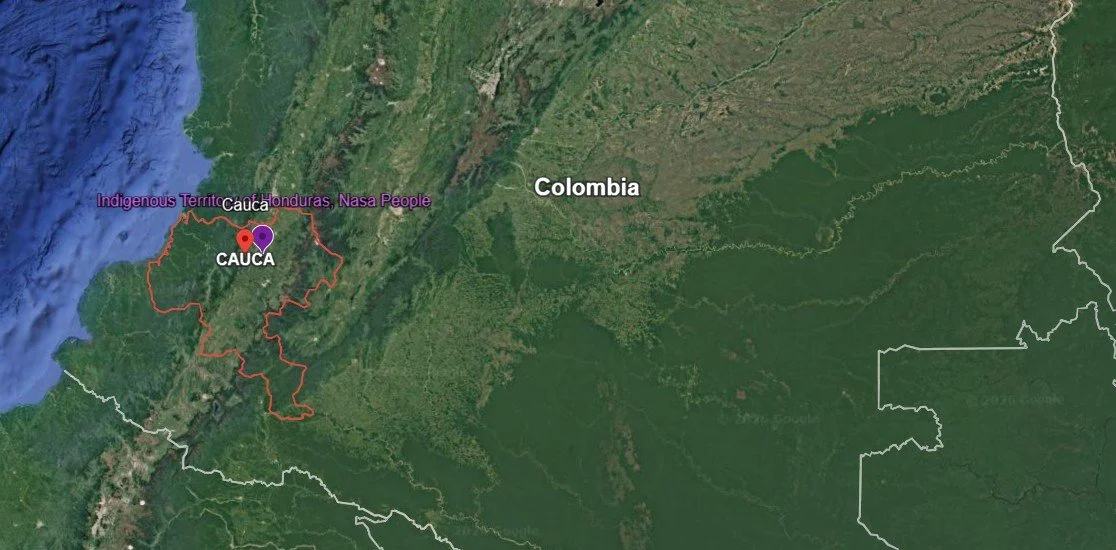
Through the case of Uriel Chocué Paja, governor of the Nasa Indigenous Reserve of Honduras in the department of Cauca, Colombia, this text illustrates a broader, documented pattern of attacks against Indigenous leaders defending territorial rights and the right of self-government. These attacks persist amid entrenched impunity and weakening international monitoring mechanisms.
The case of Nasa Indigenous Leader Uriel Chocué Paja
On November 6, 2024, Uriel Chocué Paja, governor of the Nasa Indigenous Reserve of Honduras, survived an attempted assassination when his vehicle was struck by gunfire. Although he and his companions were not physically injured, the attack followed repeated written and verbal threats that had been reported to Colombian authorities without resulting in investigations or effective protection.
Governor Chocué Paja’s commitment to defending territory and Indigenous rights has made him a target of violence intended to weaken community authority and undermine the right to self-determination. Such attacks should not be viewed in isolation. They reflect a broader pattern, documented by Colombian and international organizations, of persecution against Indigenous authorities, human rights defenders, and labour leaders.
As part of his responsibilities as governor, Uriel Chocué Paja is actively involved in processes of territorial defence and Indigenous self-government within the Nasa People’s territory of Honduras. This includes community-led efforts to protect ancestral lands affected by the La Salvajina Hydroelectric Power Plant and to demand compliance with court rulings recognizing violations of Indigenous rights. While no determination has been made regarding the motives or perpetrators of the November 6 attack, the targeting of Indigenous authorities occurs within a context of territorial disputes, large-scale infrastructure projects, and the presence of armed actors in Cauca.
On December 5, 2024, CoDevelopment Canada formally urged President Gustavo Petro to implement immediate protection measures for Uriel Chocué Paja, copying Colombian authorities and international human rights bodies. Similar letters were sent by other organizations, including Canadian unions and the American Policy Group, to demonstrate international solidarity and demand both protection and an investigation.
The importance of the International Humanitarian Law in the region
Colombia has binding obligations under International Humanitarian Law (IHL) and international human rights treaties to protect human and land rights defenders.
The field presence of the Office of the UN High Commissioner for Human Rights (OHCHR) in Colombia has been central to monitoring violations, accompanying communities facing displacement and confinement, and strengthening prevention mechanisms. Its work enables direct documentation of abuses, amplifies community voices, and contributes to accountability in regions with limited state presence.
In this context, Colombian and international organizations have expressed serious concern over announced reductions in OHCHR staff and resources in Colombia. Weakening the UN’s presence would further expose Indigenous leaders and communities to violence by deepening the conditions of impunity. Under International Humanitarian Law, Inter-American human rights standards, and United Nations instruments, the Colombian State is required to prevent forced displacement and guarantee the survival of Indigenous peoples and their systems of self-government.
Decisive international action is essential: states and institutions must urgently mobilize resources, monitor and condemn violations, and demand accountability to protect Indigenous lives, ensure the survival of cultures and ways of life, uphold systems of self-government, and reaffirm that territorial rights are not negotiable. It is imperative that international Human Rights bodies pressure the Colombian State to fulfill its obligations and provide immediate protection for at-risk Indigenous leaders and communities.
Building Protection Through International Solidarity and Legal Action
CoDevelopment Canada builds long-term partnerships between Latin American grassroots organizations and Canadian unions to achieve structural, lasting change in the defence of human and Indigenous rights. The case of the Nasa People’s territory in Cauca, Colombia, demonstrates the concrete impact of these partnerships in practice.
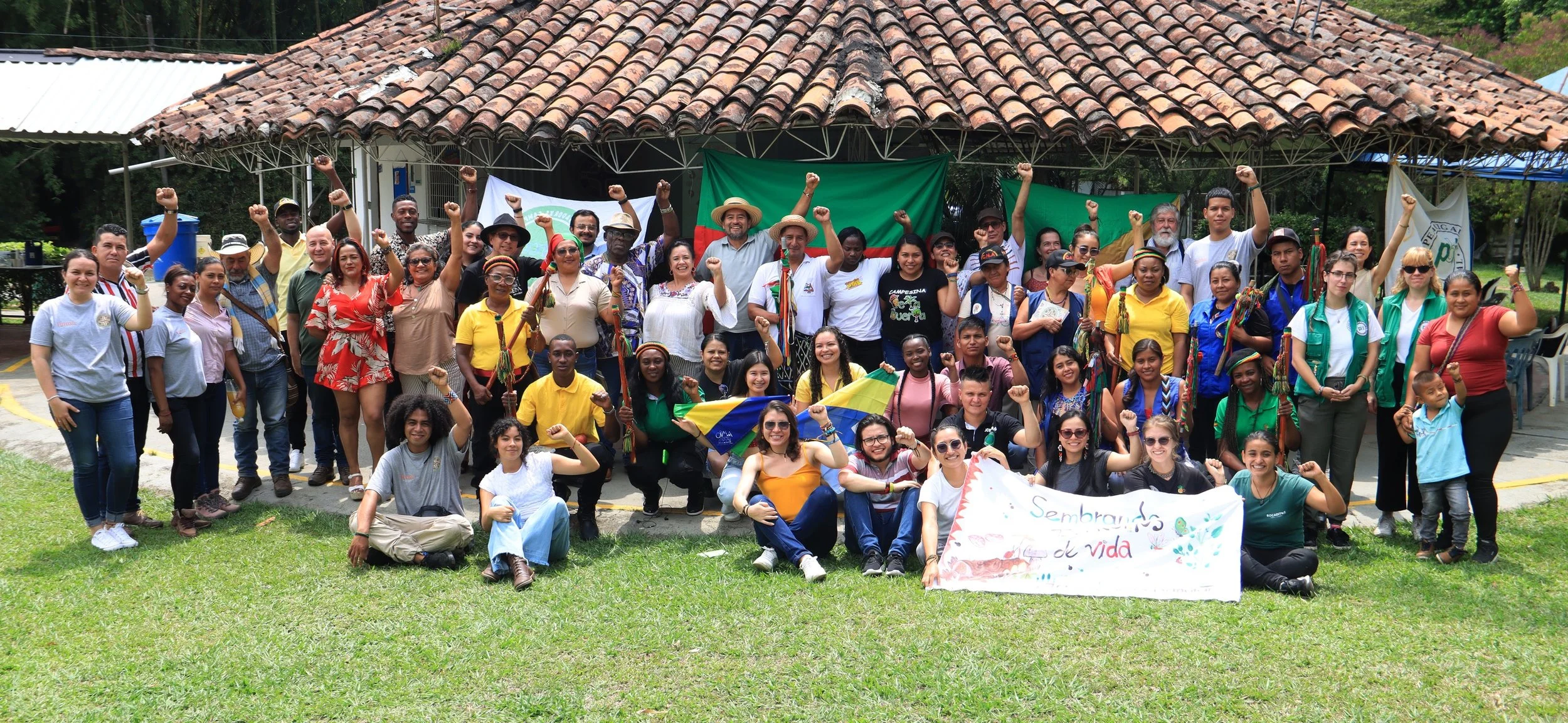
Nomadesc knowledge exchange - conservaction of territory - October 2024
Through CoDevelopment Canada’s facilitation, its Colombian partner NOMADESC has worked in sustained collaboration with CUPE BC, CUPE Metro, CUPE National, and BCGEU. This international solidarity enabled NOMADESC to provide legal accompaniment and to lead strategic litigation that resulted in the Colombian government’s formal recognition of violations of the fundamental rights of the Honduras Indigenous territory, part of the Nasa People’s ancestral lands.
NOMADESC’s work centers on the integral defence of life, territory, and culture, including the prevention of forced displacement and comprehensive support for Indigenous, Afro-descendant, peasant, and urban communities affected by armed conflict and extractive development. The Nasa People’s territory of Honduras, located in the department of Cauca, exemplifies this work.
The Honduras Indigenous territory lies within the area of influence of the La Salvajina Hydroelectric Power Plant, a mega-project that flooded large areas of collectively held land and caused severe environmental and social harm. NOMADESC provided the legal assessment and led the court case in which the Constitutional Court recognized violations of the rights of the Honduras and Cerro Tijeras Indigenous reserves. Despite this ruling, the Colombian state has failed to fully comply with its obligations, prompting the community, accompanied by NOMADESC, to bring its case before the Inter American Commission on Human Rights.
Beyond this case, NOMADESC continues to accompany communities in Valle del Cauca facing threats from illegal armed groups and displacement driven by mega-projects. Through legal representation in cases such as T-462A and T-550/15, NOMADESC challenges development models that endanger Indigenous and Afro-Colombian communities.
The Honduras Indigenous territory forms part of the UH WALA VXIÇ ancestral land of the Nasa people and is affiliated with the Regional Indigenous Council of Cauca (CRIC). Local authorities continue to lead processes of territorial control, Indigenous self-government, and cultural defence, in efforts strengthened and sustained through international partnerships facilitated by CoDevelopment Canada.
Other sources:
https://www.independent.co.uk/news/colombia-nasa-san-francisco-violence-b2789399.html